
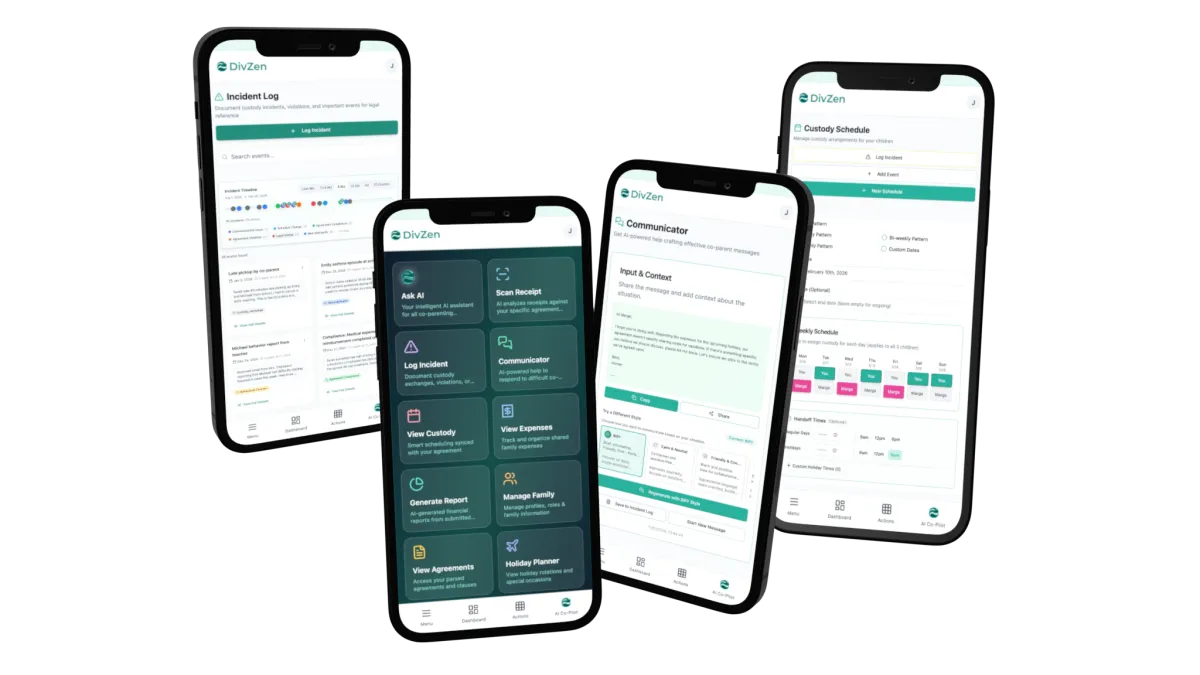
Short answer: write each problem down the day it happens, in a dated entry: when and where it happened, what happened in plain words, who was there, and anything that backs it up, such as a screenshot or a photo. Keep it factual and keep it in one place. A consistent log is easier to rely on than memory or a long message thread.
Why does documenting co-parenting problems matter?
When a disagreement comes up months later, people remember things differently. A record written at the time is clearer than anyone's memory, including your own. It also helps you see patterns, such as handovers that are late most weeks, rather than arguing about a single day.
If your lawyer or a mediator ever asks what has been happening, a dated log gives them something specific to work with. Ask your lawyer what your court expects to see; practice differs from place to place.
What should I write down?
Keep each entry short:
- The date, the time and the place.
- What happened, described as you would to a stranger. "Pickup was due at 5:00 pm; the children were collected at 6:40 pm" is clearer than "late again".
- Who was there, including the children.
- Anything that supports it: a screenshot of a message, a photo, a receipt.
- What you did next, if anything.
What should I leave out?
Leave out guesses about motives, insults and long commentary. Words like "always" and "never" make a record easier to dismiss. Stick to what you saw, heard or received.
It also helps to record things that went well, such as a handover on time or a schedule swap that worked. A balanced log reads as an honest record.
How do I keep the log in one place?
Notes spread across texts, emails and paper are hard to search and easy to lose. A single log with a timestamp on every entry is easier to keep up and easier to share later.
In DivZen, the incident log is free on every plan. Each entry is timestamped when you record it and can carry attachments. Your co-parent has no access to your account unless you share your password, and DivZen never contacts them.
How can I show my records haven't been changed?
On paid plans, DivZen exports your records and keeps a SHA-256 fingerprint of each file when it's created. Anyone, including your lawyer, can upload the file at app.divzen.co/verify to check it hasn't changed since. That makes the export tamper-evident. Whether a court accepts it as evidence is for the court to decide.
The takeaway
Document problems on the day, in plain words, in one place. Facts, times and attachments do the work; opinions don't.